It is with deep sadness that we share the news of the passing of Vicki L. Hanson, a valued member of ITI’s Advisory Board and a cherished leader in the computing community.
Vicki passed away on January 20. A pioneering researcher in human-computer interaction and accessibility, she devoted her career to expanding access to technology and broadening participation in computing. Vicki served as President of the Association for Computing Machinery (ACM) from 2016 to 2018, and as its Chief Executive Officer from 2018 to 2025.
The Board and the members of ITI’s advisory board extend our heartfelt condolences to Vicki’s family, friends, and colleagues. She will be deeply missed, and we are grateful for the wisdom and dedication she brought to our Institute.
A new open-access paper by ITI researchers, published in Discover Sustainability, explores how artificial intelligence might be used to represent non-human interests in environmental decision-making.
Developed within the Bauhaus of the Seas Sails project, the research introduces a biocentric AI assistant trained on ecological data from the Tagus Estuary. In an experimental study, participants used either this biocentric assistant or an anthropocentric counterpart to advise on a speculative planning scenario: selecting a location for a new university campus.
While the biocentric assistant did not significantly alter participants’ final decisions, it shaped how those decisions were justified. Participants engaging with the biocentric assistant demonstrated greater reflection on environmental impacts and ecological trade-offs, suggesting that AI-mediated non-human representation can influence decision-making processes even when outcomes remain unchanged.
The paper contributes to ongoing debates in more-than-human HCI, raising questions about the role of AI in sustainability, representation, and ecological governance.
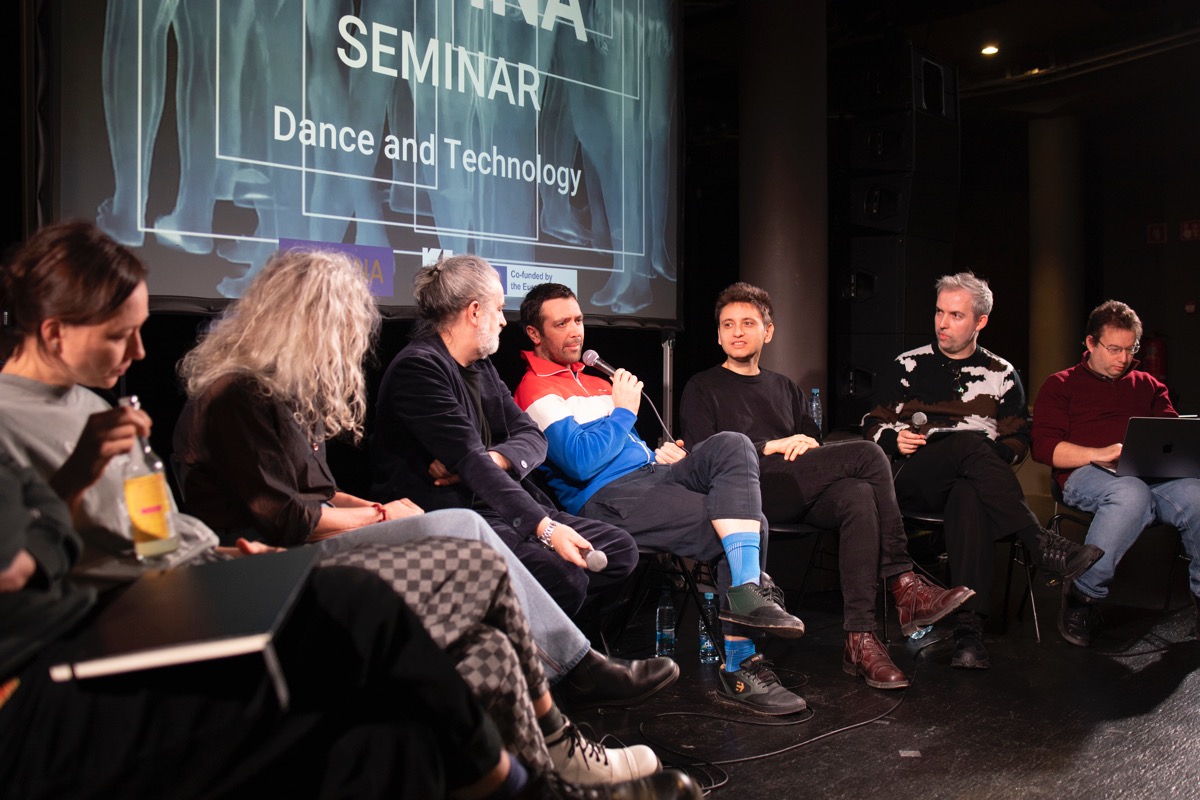
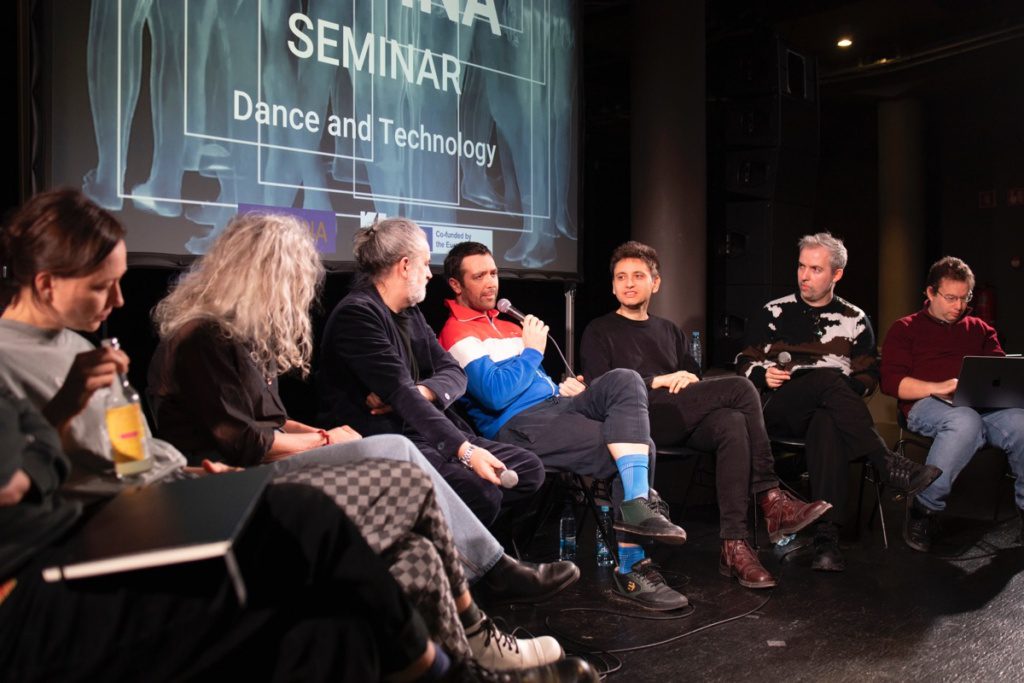
The session brought together researchers, artists, and an engaged public to explore dance-led research and embodied intelligence, with a focus on how interaction and movement inform human-centred perspectives on digital intelligence.
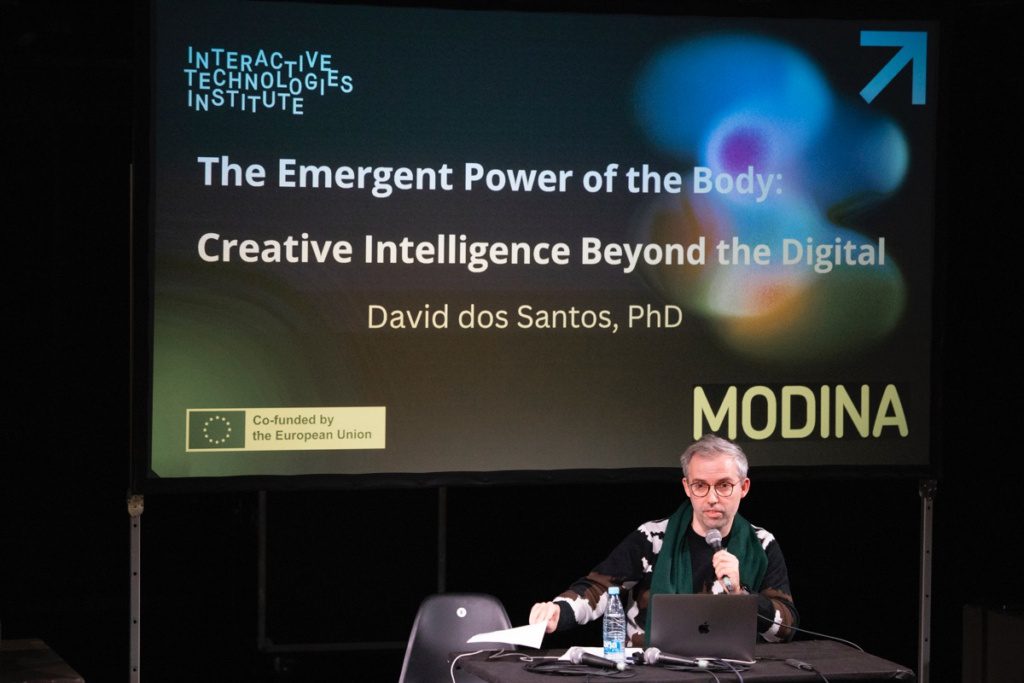
The programme included research talks by Diogo Cabral and David dos Santos, followed by an artist–audience roundtable, moderated by David dos Santos (ITI), with the artists behind:
Nino — Bruno Martelli & Ruth Gibson
Gaitless — Marko Milić & Uroš Krčadinac
Still Moving — Liis Vares & Taavet Jansen
The Ljubljana seminar framed interaction as a shared space of inquiry, allowing embodied knowledge, artistic practice, and creative processes to emerge through dialogue between artists, researchers, and audiences.
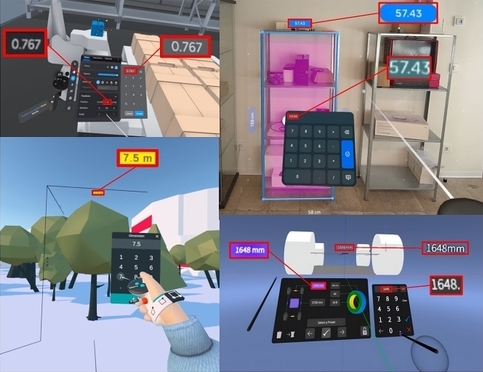
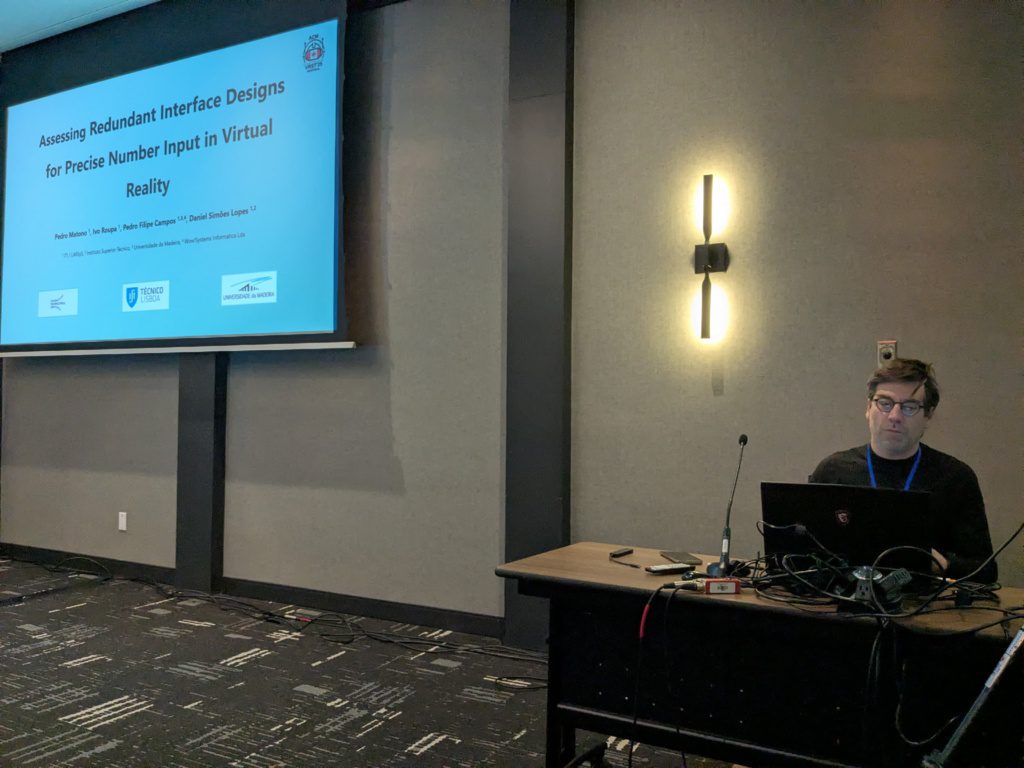
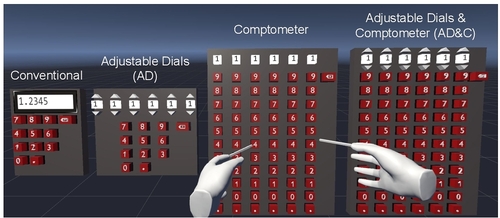
The paper addresses the challenge of typing and editing decimal numbers in Virtual and Extended Reality environments. While numerical input is an important task in spatial computing, many existing tools rely on virtual replicas of physical calculators or number pads. To address this, the authors redesigned the traditional calculator-style numpad for Extended Reality environments, introducing redundant interface features intended to make number entry and editing easier, clearer, and faster than a standard numpad.
The study evaluated these redesigned interfaces through user testing. In testing, users preferred the redesigned interfaces compared to a standard numpad, reporting that the added features supported easier and more efficient entry and editing of numbers.
The paper was published in the Proceedings of the 2025 31st ACM Symposium on Virtual Reality Software and Technology (VRST ’25), Article No. 31, pages 1–12.
Publication details Assessing Redundant Interface Designs for Precise Number Input in Virtual Reality Authors: Pedro Miguel Matono, Ivo Roupa, Pedro Campos, Daniel Simões Lopes Conference: VRST 2025 — Montreal, Canada DOI: https://doi.org/10.1145/3756884.3765979
The programme brought together artists, researchers, and audiences to reflect on creative processes at the intersection of dance, technology, and digital intelligence. As part of the festival, David dos Santos (ITI) moderated post-performance conversations following:
This Is Unreal — by Pierre Godard & Liz Santoro (5 November)
Baby — by Viktor Szeri, Tamás Páll & Gyula Muskovics (7 November)
On 8 November, MODINA was further explored through a dedicated seminar session with talks by:
The Bucharest seminar foregrounded interaction as a core dimension of artistic creation, positioning the audience as an active participant in processes of sense-making between dance and digital intelligence.
Between September and December 2025, Luciana Lima published three peer-reviewed papers presented at international conferences in Human–Computer Interaction and game studies. Together, these works address reflexive research methodologies, gender inequities in the digital games sector, and the recovery of overlooked contributions to Portuguese game history.
Techno-Biographical Reflexive Atelier: A Method for Exploring Personal Narratives and Sociotechnical Transformations
This paper presents a preliminary analysis of the Techno-Biographical Reflexive Atelier (TeBRA), a collaborative autoethnographic method designed to explore the intersection of personal narratives, sociotechnical systems, and socio-cultural contexts. The method supports critical reflection on how power relations and inequalities shape engagements with technology, contributing a new approach for reflexive practice in HCI research and design.
Mnema: Bridging Research and Art to Combat Gender Inequity in the Gaming Sector
This paper describes the collaborative creation of Mnema, an animated short film developed by women researchers and artists in HCI and gender studies. Based on interviews with Portuguese women working in the video game industry and archival research on gaming culture in Portugal, the project combines academic research with audiovisual storytelling, translating research insights into an accessible cultural form that raises awareness of gender inequities in the games sector.
Unveiling Hidden Pioneers: Carla Vieira Faria’s Legacy in Portuguese Digital Game History
Awarded Best Paper at Videojogos 2025, this study examines the trajectory of Carla Vieira Faria, a pioneer in the development of educational games for people with disabilities in Portugal during the 1990s and early 2000s. Through archival research and an in-depth interview, the paper recovers her largely unacknowledged contributions, highlighting how women have expanded the scope of digital games while remaining underrepresented in historical accounts.
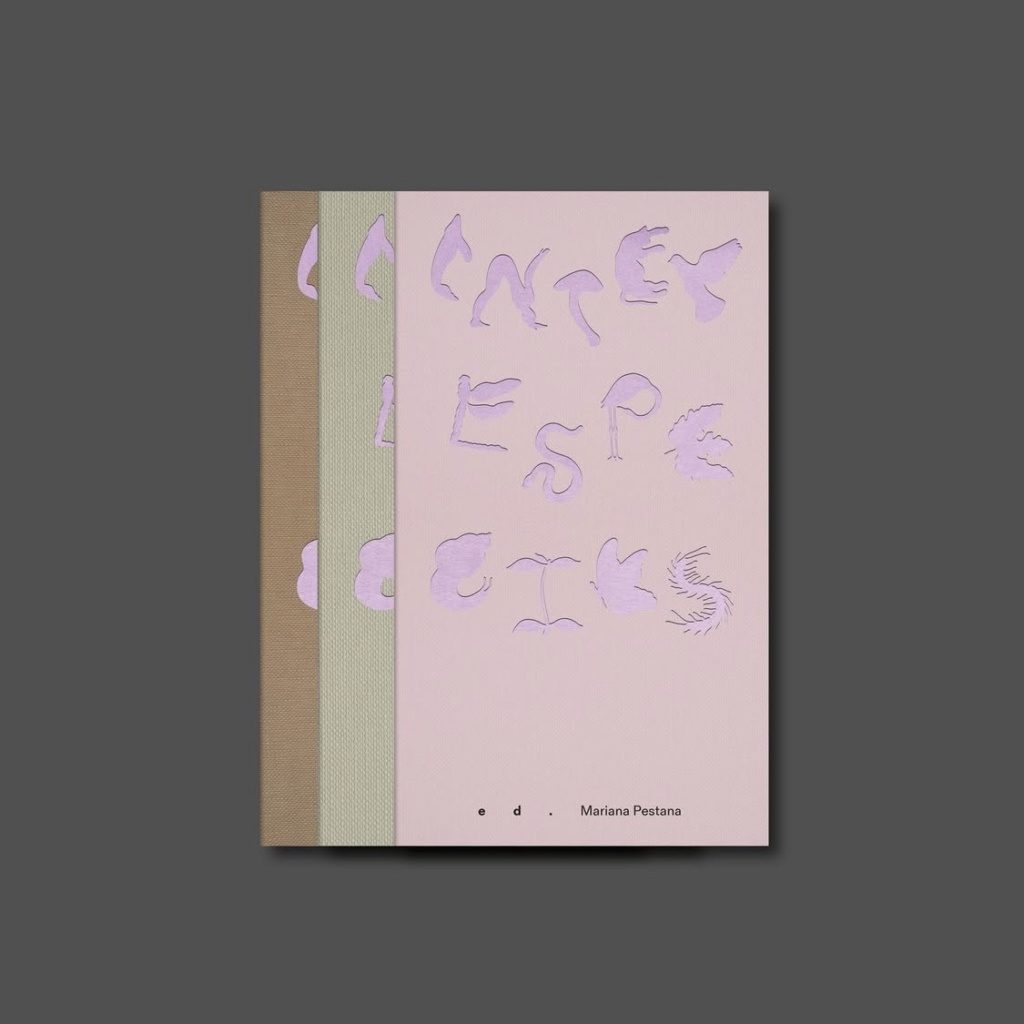
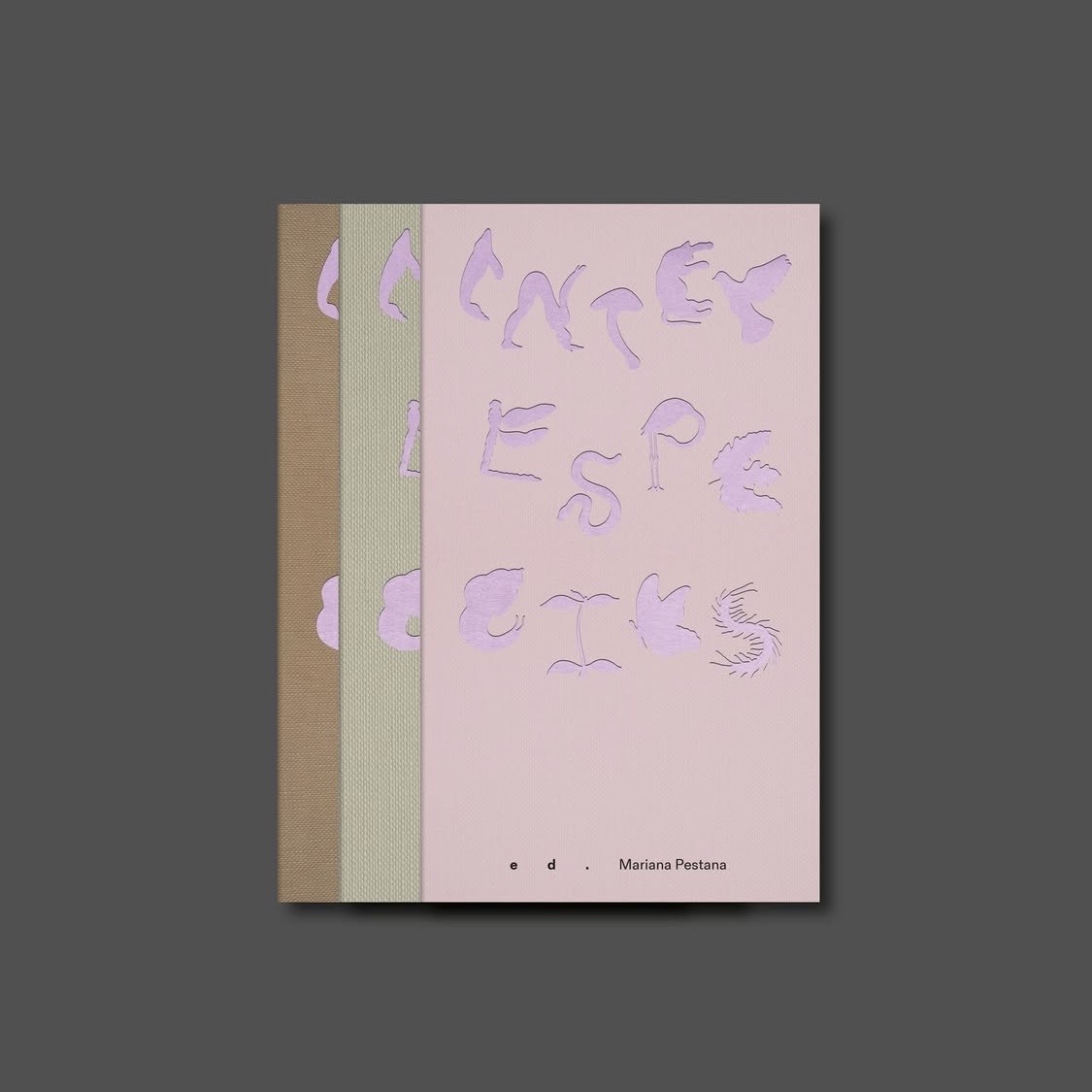
The pictorial introduces Eden X, a digital assembly that re-imagines how nonhuman entities can participate in decision-making processes around environmental concerns. Focusing on rivers and their constituents as precursors of nature rights, it showcases a method for establishing a more-than-human constituency where diverse voices deliberate, make proposals, and vote democratically through digital technologies.
Drawing on Ron Wakkary’s notions of constituency and speaking subject, this work contributes an exploratory design methodology that de-centers the human as the sole point of decision-making, offering concrete approaches for engaging nonhuman perspectives within HCI and design practice.
Publication details Designing with an Assembly of Many: Eden X on rivers, their constituents and rights Authors: Joana Pestana, Mariana Pestana, Miguel Carvalhais, Nuno Jardim Nunes Proceedings of CHItaly ’25 – 16th Biannual Conference of the Italian SIGCHI DOI: https://doi.org/10.1145/3750069.3750443
Ana Cristina Saial, researcher at the Interactive Technologies Institute (ITI), has recently published two studies that examine how digital technologies shape intimate relationships among emerging adults and how interactive, game-based approaches can contribute to the prevention of violence in these contexts.
The first study, “Between Kisses and Bytes: Cyber Dating Abuse and Internet Use in Emerging Adulthood,” was presented at INTERACT 2025, held in September in Brazil. Authored by Ana Cristina Saial, Alda Portugal, Élvio Rubio Gouveia, Paulo Nascimento, Muhammad Satar, and Ana Paula Relvas, the research explores the use of the Internet and Information and Communication Technologies by emerging adults aged 18–29 in their intimate and romantic relationships. The study characterizes problematic Internet use and diagnoses the prevalence of online dating violence within this age group. The findings highlight the need to invest in prevention measures and strategies specifically addressing dating violence in digital contexts. The authors emphasize the importance of engaging young people through interactive and technology-based approaches, such as digital games and mobile applications, to promote awareness and support attitude change. DOI: https://doi.org/10.1007/978-3-032-05008-3_33
Together, these studies highlight the potential of digital and game-based approaches to foster empathy, awareness, and reflection around online and intimate partner violence among emerging adults. They also contribute to ongoing work towards the development of a gamified digital intervention for the prevention of intimate partner violence, being co-created with young adults and health professionals.
DCitizens is a research and innovation project led by Instituto Superior Técnico and Interactive Technologies Insitute, that aims to foster Digital Civics in Lisbon, exploring how digital technologies can empower citizens and communities to co-create services, shift from transactional to relational models, and reconfigure relations between citizens, communities, and institutions.
During the consortium meeting, partners reviewed deliverables, and major achievements, prepared the final report and review processes, and advanced one of the project’s key outputs: the Research & Innovation Agenda for Lisbon. The programme also included discussions on future research collaborations.
Alongside the consortium meeting, Early Stage Researchers participated in training sessions focused on research communication, methodological exchange, and science communication, including a 3-Minute Thesis workshop, a method swap session, and a research showcase.
The final session featured presentations from community partners. Paulo Rosa presented WearAccess, a bespoke accessibility service for a teenager with multiple disabilities, developed through the co-creation of an always-available smartwatch-based support for everyday communication and entertainment. The session concluded with Rui Estrela presenting Balcão do Bairro, a community-based walk-in service desk in Lisbon designed to improve access to digital services, operating as a “middle-out” institution between grass-roots initiatives and institutional hierarchies.
The keynote, titled “Awkward by Design”, explored awkwardness as both a research tool and a lens for design practice, particularly when engaging with sensitive topics such as intimate health and care. Drawing on a series of studies, the talk highlighted how intentionally incorporating awkwardness into design can disrupt norms, provoke reflection, and create opportunities for deeper engagement, fostering more memorable and meaningful experiences.
Teresa Almeida’s interdisciplinary work critically engages with the design of technologies related to health(care) and wellbeing, feminist data practices, and the security and privacy of intimate data, combining research-through-design and participatory methods to address stigmatized topics and include marginalized communities of practice.